Washable, never moldy
Comes fully apart. Dishwasher-safe and boil-safe — no salt-water soaks, no hidden valves quietly growing mold.
 Sift
Targeting microplastic filtration to 0.2 µm · certification in progress
Sift
Targeting microplastic filtration to 0.2 µm · certification in progress
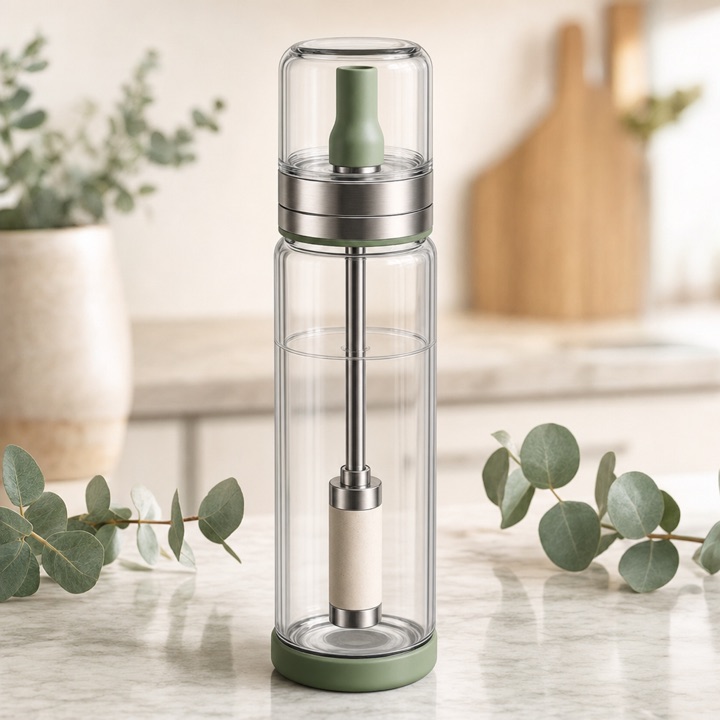
Glass, steel, and silicone — the only materials your water ever touches. A washable filter bottle, rethought from the inside out. And the straw on your filter bottle? Probably still plastic. We're building the opposite — a glass-and-metal filter straw and cup you can actually keep clean. No weekly salt-water soaks. No hidden valves growing mold. It comes fully apart, washes clean, and the filter just swaps out. Most filter bottles still pour your drink over a plastic lid, valve, and mouthpiece. Ours never lets your water touch petroleum plastic. Brita-style filters were designed in the 1940s for chlorine and lead. They miss anything under 5 µm — including every microplastic particle. Sift's filter targets down to 0.2 µm. A peer-reviewed study (NEJM, 2024) found plastic particles in over half of patient arteries — and 4.5× the heart-attack rate. Sift targets microplastics down to 0.2 µm, what your tap filter misses.
No spam — just build updates. Unsubscribe anytime.
Join the first 1,000 founders — founding pricing, first production access & an extra filter pack.
We'll email your address with build updates and founding-member access — nothing else.
Quick one — what would you pay for it?
Thanks — that helps us price it right.
First production batch, founding pricing, and we'll credit you as a Founding Member on the site. Refund anytime by replying to your confirmation email.
Stripe-secured · No commitment to buy more · Refund anytime


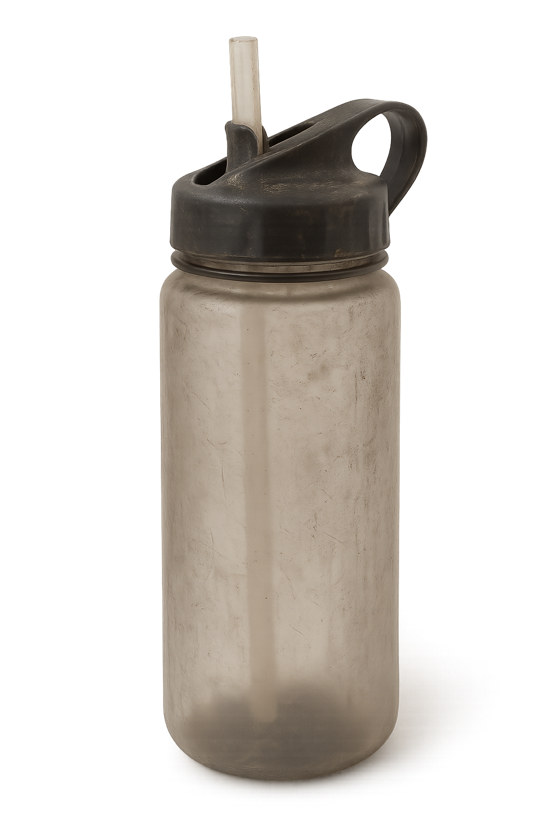
Hidden valves. Threaded ridges where mold hides. Soft plastic mouthpieces that yellow in the dishwasher. Every filter bottle on Amazon comes with the same "rinse with vinegar weekly" disclaimer — they were never designed to be cleaned, only maintained.

Sift comes fully apart in six pieces. Glass, steel, silicone, filter. Top rack of the dishwasher with your mugs. No tools. No salt soaks. No instruction card.
Stop drinking through plastic.
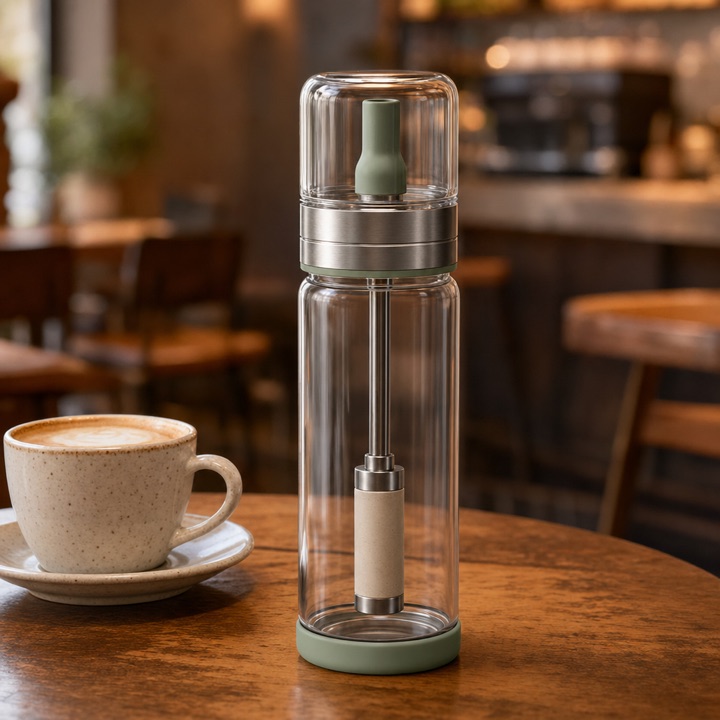
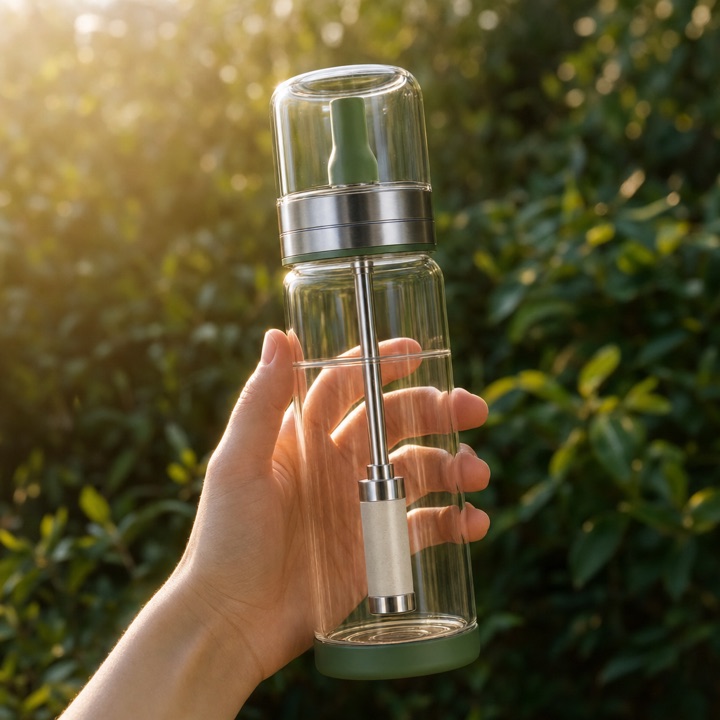
It comes apart into six parts — glass, steel and silicone — so every surface actually gets clean.

Comes fully apart. Dishwasher-safe and boil-safe — no salt-water soaks, no hidden valves quietly growing mold.
Borosilicate glass, food-grade steel, and a platinum-cured silicone tip. Your drink never runs over petroleum plastic.
Silicone is a silicone elastomer — not a petroleum plastic like PET/PP/PE. We'll show exactly what every part is made of.
Swap the cartridge, keep the cup. Cheaper over time — and far less waste than tossing the whole straw.
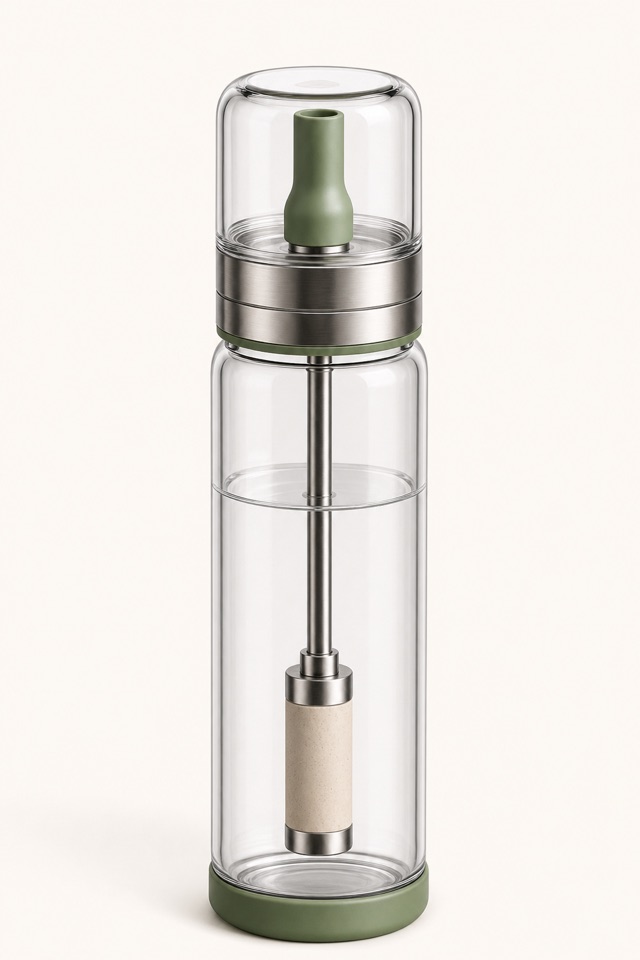
A clear glass cap twists on over the mouthpiece — so it won't fall off, nothing touches the part that meets your lips, and its flat top doubles as a little cup.
Most filter straws trap mold in valves and crevices you can't reach — makers literally tell you to soak them in salt water, and won't cover mold under warranty. You've seen the gunk.
Sift comes apart into six pieces in seconds. Rinse every surface, run it through the dishwasher, snap it back together. No hidden parts, nowhere for mold to hide.
Every part that touches your drink is glass, metal, or food-grade silicone — never petroleum plastic.

Lab-grade glass — pure, durable, chemical-free. The body and the dust cap are both glass; nothing leaches, nothing holds odor.

Food-grade and corrosion-resistant, with a knurled lid for a sure, no-slip grip.

Food-grade, platinum-cured — soft on your lips, and a silicone elastomer, not a petroleum plastic.

A food-grade, swappable cartridge — built to refine your water, trapping fine particles, chlorine, and off-tastes.
Pour water straight into the borosilicate glass body.
Water is drawn through the replaceable filter inside — fine particles, chlorine, and odor caught on the way.
It rises through the steel straw to the silicone tip — never touching petroleum plastic.
Comparison based on public product specs and reviews. We're targeting microplastic filtration to 0.2 µm — see "What we won't claim" below.

A Huberman Lab episode on microplastics is what made me stop and pay attention. I'd heard the word before, but never took it seriously — so I started digging, and found a problem hiding in plain sight.
Where I live in New Jersey, everyone knows the tap water isn't perfect — PFAS and all — so we put filters on the kitchen sink. And then we hand our kids water in a plastic cup, every single day. I kept trying to switch us over to glass and metal, but the habit always slid back.
The closest fix I could find was a LifeStraw — but it's pricey, built for the backcountry, and made mostly to kill bacteria. In a city, bacteria isn't the problem. Microplastics are — and almost no one is building for it.
So I decided to. I'm an electrical engineer — I spent years building train-control signaling systems (I even wrote the book on it), and I'm a senior researcher at Rutgers CAIT. My current startup builds automated microgreens growers, where I already work with food-grade filtration and the supply chain to source it. I have what it takes to make this right.
I'm building the bottle I want for my son. If you've ever filtered your water at home only to drink it through plastic — it's for you too.
— Francisco Wang, founder
The science on microplastics is young — but it's adding up fast. In just the last few years, researchers have found plastic particles where they really shouldn't be.
~240,000 plastic particles in a single liter of bottled water — most of them nanoplastics.
PNAS · 2024 ↗Microplastics found in human arterial plaque, linked to a higher risk of heart attack and stroke.
New England Journal of Medicine · 2024 ↗Microplastics detected in the human placenta — passed to the next generation.
Environment International · 2021 ↗Microplastics found in human testicular tissue — raising new questions for reproductive health.
Toxicological Sciences · 2024 ↗We're not claiming a bottle protects your health — the research is still emerging, and we won't pretend otherwise. But it's enough that we'd rather our water touched only glass and metal. For a clear, accessible overview, we recommend this episode:
Huberman Lab — The Effects of Microplastics on Your Health & How to Reduce Them Listen ↗We're validating real demand before we make a single unit. The first 1,000 founders get:
No spam — just build updates. Unsubscribe anytime.
Welcome aboard. We'll be in touch at your address before anyone else.
Quick one — what would you pay for it?
Thanks — that helps us price it right.

We'll never tell you your water is "plastic-free." Micron filters can't remove nanoplastics — nothing portable can, short of reverse osmosis.